
What is a DISC Assessment?
The DISC assessment is a powerful tool designed to understand and improve human behavior, communication, and interpersonal relationships. DISC offers a versatile framework for personal and professional development.


A Flexible, Popular Assessment
DISC is a flexible and widely used behavioral assessment tool known for its simplicity and adaptability. It categorizes individuals into four primary personality traits—Dominance, Influence, Steadiness, and Conscientiousness—providing valuable insights into behavioral tendencies, decision-making, and communication styles.
Easy to use individually or in groups, DISC helps people better understand themselves and others, making it a powerful resource for workplace applications like team building, leadership development, conflict resolution, and collaboration. Beyond professional use, DISC also supports personal growth by fostering self-awareness, adaptability, and more effective communication in all areas of life.
The Four DISC Personality Traits
D
Dominance
Risk-takers and self-starters, often focused on results and challenges.
C
Compliance
Detail-oriented and analytical, valuing accuracy and quality.
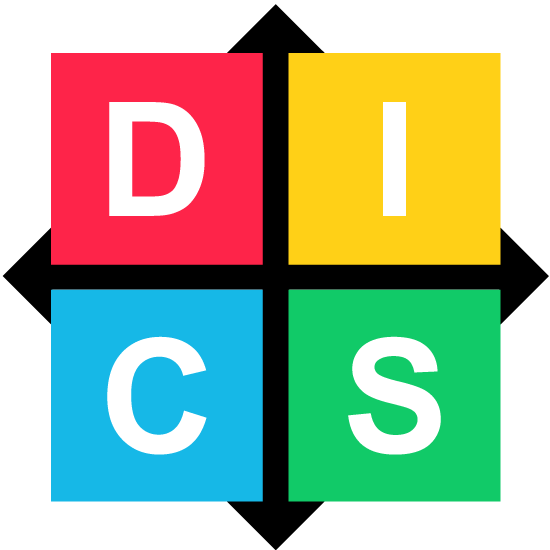
I
Influence
People-oriented, enthusiastic, and thriving in social interactions.
S
Steadiness
Reliable and consistent, seeking stability and support.
How DISC Enhances Communication & Decision-Making
Understanding DISC profiles enhances communication and decision-making by enabling individuals and teams to tailor their interactions and strategies according to different styles. Recognizing whether a team member prefers direct, data-driven, or empathetic communication helps reduce misunderstandings and fosters clearer dialogue. DISC also informs decision-making by highlighting diverse perspectives and decision styles, allowing for more balanced and effective choices.
By aligning communication strategies and collaboration approaches with DISC insights, teams can work more harmoniously, resolve conflicts more efficiently, and make better-informed decisions.


Applications of DISC in the Workplace
DISC is a versatile tool widely utilized in professional settings to optimize team dynamics and individual performance. Its applications span across team building, where it enhances collaboration and understanding among team members; leadership development, by tailoring leadership approaches to different DISC styles; and conflict resolution, through addressing interpersonal issues with insights into behavioral tendencies.
DISC is also valuable in sales training, helping professionals leverage behavioral insights to boost performance, as well as in recruitment and hiring, streamlining the process and supporting more informed decision-making.
Origins of DISC
The foundation of DISC dates back to the early 20th century when psychologist William Moulton Marston explored the connection between human emotions and behavior. His groundbreaking work laid the groundwork for the DISC model, which was further refined and popularized by experts such as Walter V. Clarke and John G. Geier.
Over the decades, the DISC model has undergone continuous development, incorporating advances in psychology and research. Today, DISC is a widely recognized and respected tool for personality assessment, significantly influencing the fields of psychology, education, and organizational development. Its evolution reflects its adaptability and enduring relevance in understanding human behavior.

Featured Blogs on DISC

The True Value of a Free DISC Assessment
Maybe someone suggested that DISC will help you to become more self-aware. They also said there are plenty of free sites to go and take a free…

Ultimate Reasons Employees Quit & How PeopleKeys DISC Can Help
Employee retention is a critical issue for organizations of all sizes, from small family-owned businesses to Fortune 500 companies…

What is the ROI on DISC Assessments?
Organizations can enhance communication, reduce conflict, increase retention, and boost productivity. But what is the true long-term ROI of these…